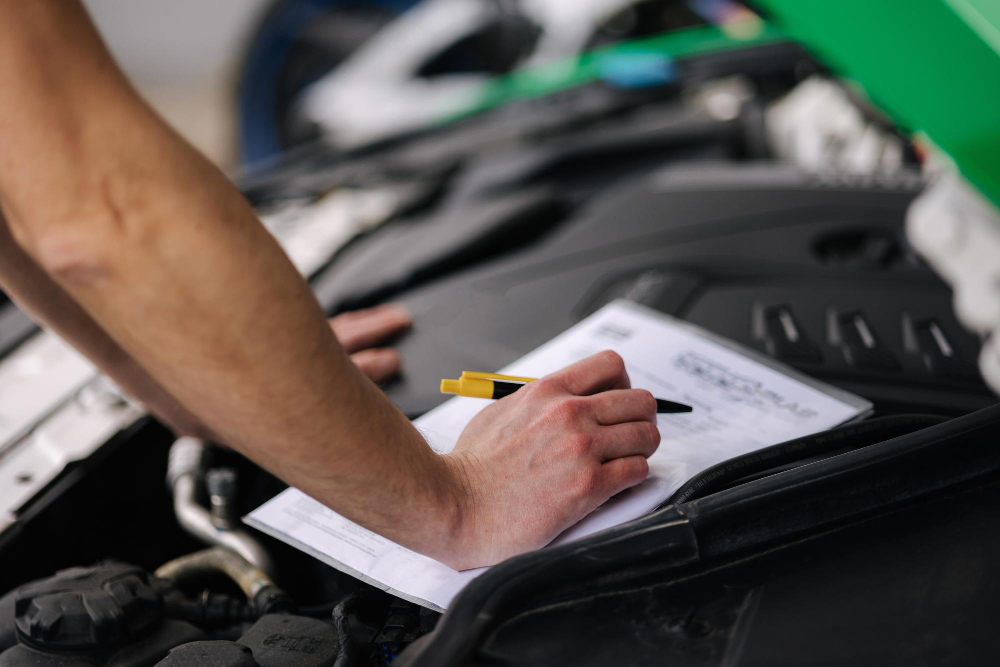
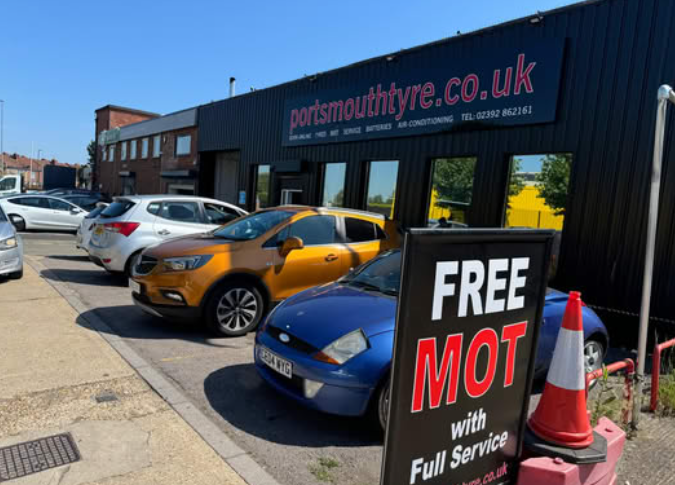
An MOT failure does not always mean your car has a serious mechanical problem. Many of the most common MOT failures are caused by everyday wear, poor visibility, faulty bulbs, worn tyres and components that could have been checked before the test. At PortsmouthTyre, drivers can book an MOT online and have their vehicle tested at the Southsea workshop.
Understanding the most common reasons cars fail an MOT can help you identify problems earlier, avoid an unexpected repair bill and give yourself a better chance of passing first time.
What Are the Most Common MOT Failures?
The latest MOT testing figures for cars and light vehicles show that the same broad areas regularly account for a significant proportion of failures.
| Rank |
MOT failure category |
What commonly goes wrong |
| 1 |
Lights and electrical equipment |
Bulbs, indicators, headlights and warning lights |
| 2 |
Suspension |
Worn bushes, springs, shock absorbers and mounting points |
| 3 |
Tyres |
Tread, damage, pressure and uneven wear |
| 4 |
Brakes |
Pads, discs, brake pipes and braking efficiency |
| 5 |
Visibility |
Windscreen damage, wipers and washers |
| 6 |
Body, chassis and structure |
Corrosion, damage and insecure components |
| 7 |
Emissions, exhaust and leaks |
Excessive emissions, exhaust faults and fluid leaks |
| 8 |
Steering |
Worn components, excessive play and steering faults |
| 9 |
Seat belts and restraint systems |
Damaged belts, buckles and warning systems |
| 10 |
Road wheels |
Damaged, insecure or unsuitable wheels |
The figures are useful because they show that an MOT is not simply about whether the engine runs properly. Some of the most common problems are found in parts of the vehicle that drivers rarely think about until the test is due.
1. Faulty Lights and Electrical Equipment
Lighting faults are consistently among the biggest causes of MOT failures in the UK.
A vehicle can fail because of a blown headlight, brake light, indicator, rear fog light or number plate light. Headlamp aim, damaged lenses and certain dashboard warning lights can also cause problems.
Fortunately, this is one of the easiest areas to check yourself.
Before your MOT, switch on the headlights, sidelights, indicators, hazard lights and fog lights. Ask somebody to stand behind the car while you operate the brake pedal so you can confirm the brake lights are working.
A few minutes spent checking your lights could prevent an otherwise unnecessary MOT failure.
2. Suspension Problems
Suspension components take a considerable amount of punishment from potholes, speed bumps and uneven roads.
Common MOT problems include worn suspension bushes, damaged springs, leaking shock absorbers and excessive movement in suspension components. Some faults are difficult to spot without specialist equipment, but there are warning signs drivers can look out for.
Listen for knocking or clunking noises over bumps. Pay attention if the vehicle feels unstable through corners or seems to bounce excessively. Uneven tyre wear can also indicate a suspension or alignment problem.
If something feels different from normal, it is better to have it inspected before the MOT rather than waiting for the tester to find it.
3. Worn or Damaged Tyres
Tyres are another major source of MOT failures, and they deserve particular attention because they are the only part of your car directly connecting it to the road.
The legal minimum tread depth for cars is 1.6mm across the central three-quarters of the tread and around the entire circumference. However, tyres can also fail because of cuts, bulges, exposed cords or other serious damage.
Do not only look at the centre of the tread. Check the inner and outer edges as well. Uneven wear can indicate incorrect pressures, wheel alignment problems or suspension issues.
PortsmouthTyre supplies and fits both budget and premium tyres from its Southsea workshop, with free fitting included when tyres are purchased through the business. If your tyres are approaching the legal limit or showing signs of damage, replacing them before the MOT can prevent a failure and improve safety.
For more information, see the guide to common MOT failures and how to avoid them.
4. Brake Problems
Brakes are a critical part of the MOT because even relatively small faults can affect a vehicle’s ability to stop safely.
Worn brake pads and discs are common problems, but an MOT also checks braking efficiency and balance. Brake pipes, hoses, the parking brake and other components can also be inspected.
Warning signs include squealing, grinding, vibration through the steering wheel or brake pedal, and the vehicle pulling to one side when braking.
Do not ignore these symptoms simply because the car still appears to stop normally. Brake components can deteriorate gradually, meaning a vehicle may feel acceptable to drive while still developing a fault.
5. Windscreen, Wipers and Visibility
Your ability to see the road clearly is an important part of the MOT.
Windscreen damage can cause a failure if it is within the relevant area directly in front of the driver. Wiper blades also need to work properly and clear the windscreen effectively.
Before your test, check for chips and cracks and look closely at the condition of your wiper blades. If they leave large areas uncleared, smear the glass badly or have damaged rubber, replacing them beforehand is sensible.
Do not forget the washer system. Make sure the screenwash reservoir is filled and the washers produce enough fluid to clean the windscreen.
6. Body, Chassis and Structural Problems
The MOT also examines the condition of the vehicle’s body, chassis and structural components.
Serious corrosion can become a problem, particularly on older vehicles. Damage that affects the structural integrity of the vehicle can also result in a failure.
Other areas can include insecure body panels, doors, bonnet catches and components that are not properly secured.
A visual inspection underneath the car is difficult for most drivers, so regular servicing is useful for identifying developing corrosion or structural problems before they become serious.
7. Emissions, Exhausts and Leaks
Emissions-related problems can catch drivers by surprise, particularly if a vehicle has developed a fault that is not immediately obvious.
The MOT checks exhaust emissions on applicable vehicles, while the exhaust system itself is inspected for condition and security. Excessive smoke can also indicate an underlying problem.
Fluid leaks can cause MOT issues depending on their severity and location. If you notice oil, coolant or another fluid appearing underneath your car, do not simply clean it up before the test.
Finding the source is more useful than hiding the symptom.
An illuminated engine management warning light should also be investigated before booking an MOT. A diagnostic check can identify faults that may otherwise lead to an unexpected failure.
8. Steering Faults
Steering components need to operate correctly and without excessive play.
Worn steering components can develop gradually, so drivers may notice little more than vague steering, unusual noises or uneven tyre wear. A vehicle that wanders, pulls to one side or feels less precise than normal should be checked.
Wheel alignment can also be relevant. Incorrect alignment can cause uneven tyre wear and affect how the car handles.
If you have recently hit a large pothole or kerb and the steering feels different afterwards, arrange an inspection rather than assuming the vehicle is fine.
9. Seat Belts and Restraint Systems
Seat belts are another straightforward area that drivers can check before an MOT.
Pull each belt fully out and look for fraying, cuts or other damage. Check that every buckle locks securely and releases correctly. Belts should also retract properly rather than hanging loose.
Dashboard warning lights relating to restraint systems can also indicate a fault that needs attention.
It is worth checking every seat belt, not just the driver’s. A problem with a less frequently used rear seat belt can still result in an MOT failure.
10. Damaged or Insecure Road Wheels
The final category in the top ten relates to the wheels themselves.
Wheels need to be secure and in suitable condition. Damage can occur after hitting potholes or kerbs, while corrosion or other defects can become more significant as a vehicle ages.
When checking your tyres before an MOT, take a few seconds to inspect the wheels at the same time. Look for obvious cracks, serious damage or anything that appears unusual.
If a wheel has recently suffered a hard impact, it is worth having it checked even if the tyre appears undamaged.
How to Give Your Car the Best Chance of Passing First Time
You do not need to be a mechanic to carry out some useful pre-MOT checks.
A few days before your appointment, check:
- All exterior lights and indicators
- Tyre tread and sidewalls
- Tyre pressures
- Windscreen condition
- Wiper blades
- Screenwash
- Horn
- Seat belts and buckles
- Dashboard warning lights
- Obvious fluid leaks
- Unusual suspension or brake noises
These checks cannot guarantee a pass because many MOT faults require professional equipment or inspection. They can, however, identify some of the simple problems that regularly catch drivers out.
For a more detailed preparation guide, see how to pass your MOT in Portsmouth first time.
What Happens If Your Car Fails Its MOT?
An MOT failure does not necessarily mean you have a major repair on your hands. The tester will explain which items caused the failure and what needs to be addressed.
At Portsmouth Tyre, faults are explained clearly and a no-obligation repair quote can be provided. Repairs can be carried out at the workshop, subject to the nature of the work required. If repairs are completed there, a free retest is available within the permitted period.
Most MOT tests at the Southsea workshop take around 45–60 minutes, and customers can either wait or leave the vehicle with the team.
Book Your MOT in Portsmouth
The best way to avoid an unpleasant surprise is to give your car a little attention before the test rather than waiting until the MOT tester discovers a problem.
Lights, tyres, brakes, suspension and visibility account for many of the issues found during MOT testing, and several can be identified with simple checks at home. Others require a trained technician and proper inspection equipment.
PortsmouthTyre provides MOT testing at its workshop on Rodney Road in Southsea, with online booking and same-day MOT appointments available through its live booking system. If your MOT is approaching, booking early gives you more time to deal with any repairs that may be required and get your car safely back on the road.