Headlights are one of the easiest parts of a car to take for granted. They switch on, they illuminate the road and, from the driver’s seat, everything can appear to be working perfectly. Yet incorrect headlight aim is a surprisingly common reason for an MOT failure.
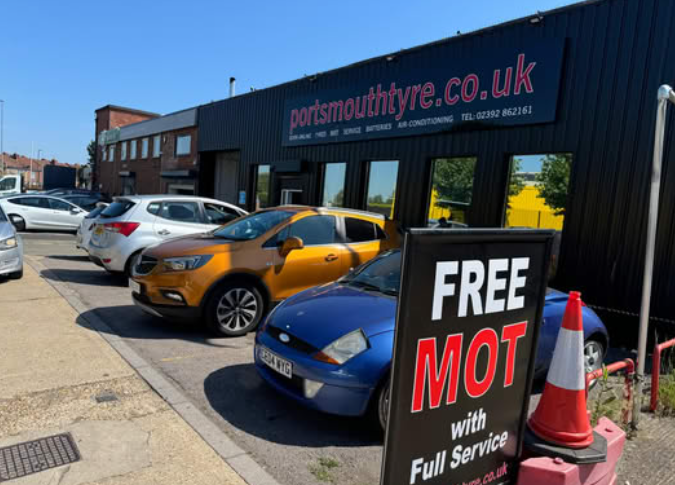
For drivers in Portsmouth, PortsmouthTyre can check your vehicle’s lighting as part of its MOT testing service. Understanding why headlights become misaligned and what the MOT tester is looking for can help you spot potential problems before test day.
What Does Headlight Aim Mean?
Headlight aim refers to the direction in which your headlights point.
The beam needs to illuminate enough of the road ahead for you to see clearly while avoiding shining directly into the eyes of drivers travelling towards you.
This means headlights are designed to have a specific beam pattern and angle. During an MOT, the tester checks that the headlamp is aimed correctly and that the beam pattern meets the required standard.
A headlight can therefore be bright, clean and fully operational but still fail because it is pointing in the wrong direction.
Why Does Headlight Aim Matter During an MOT?
Incorrectly aimed headlights can create two problems.
If the beam points too low, your ability to see the road ahead at night can be reduced. If it points too high or is incorrectly aligned, it can dazzle other road users.
The MOT therefore considers both the operation of the lighting system and the direction of the beam.
This is particularly important for dipped headlights because their beam pattern is designed to provide useful illumination without causing unnecessary glare for approaching traffic.
What Causes Headlights to Become Misaligned?
Headlight aim can change for several reasons, and you do not necessarily need to have had an obvious accident for it to happen.
Common causes include:
- Hitting potholes or kerbs
- Minor impacts
- Suspension wear
- Incorrect suspension height
- Replacing a headlamp
- Incorrectly fitted bulbs
- Moving or damaged headlamp mounting points
- Heavy loads in the vehicle
- Incorrect manual headlight adjustment
Over time, vibration and general wear can also affect the position of a headlamp.
A vehicle that has recently had suspension or front-end work carried out is particularly worth checking, as changes to ride height can affect the position of the beam.
Can a Headlight Bulb Cause an MOT Failure?
Yes, although the problem is not necessarily the bulb itself.
If a bulb has been incorrectly fitted, particularly on a headlamp designed around a specific bulb position, the beam pattern can be affected.
This can happen with some replacement bulbs where the bulb is not seated correctly in its holder.
A bulb may appear to be working normally from outside the car, but the light could be scattered or directed incorrectly.
This is one reason why replacing a bulb and assuming the headlight is automatically correctly aligned is not always enough.
What Does the MOT Tester Check?
The tester checks the condition and operation of the relevant lamps, including whether the headlamp beam is correctly aligned.
A specialised headlamp aim testing device is used to assess the beam.
The tester is not simply standing in front of your car and deciding whether the headlights look straight. The equipment allows the beam pattern and alignment to be assessed against the required limits.
This is why headlight problems that are difficult to identify at home can still be detected quickly during an MOT.
Why Do Headlights Become Too High or Too Low?
The angle of a headlight can be affected by the physical position of the lamp and the height of the vehicle.
If a headlamp has been knocked or its mounting bracket has moved, the beam can point in the wrong direction.
Suspension problems can also affect the vehicle’s ride height. If one side of the vehicle is sitting differently from normal, the position of the headlight relative to the road changes.
There is also a manual adjustment system on many vehicles that allows the driver to alter the headlamp level depending on the load being carried.
If this has been set incorrectly, the beam may be positioned too high or too low.
What About the Headlight Adjustment Inside the Car?
Many cars have a small dial or electronic control that allows the headlight level to be adjusted.
This is designed to compensate for changes in vehicle load.
For example, putting heavy luggage in the boot can make the rear of the car sit lower and cause the front of the vehicle to rise slightly. Without adjustment, the dipped headlight beam can move upwards.
The adjustment allows the driver to lower the beam accordingly.
If your vehicle has this type of control, make sure it is set appropriately before your MOT. If the car is unloaded, the setting should normally be in its standard position rather than configured for a heavily loaded vehicle.
Can Potholes Affect Headlight Aim?
Absolutely.
Portsmouth’s roads, like roads elsewhere in the UK, can expose vehicles to potholes, uneven surfaces and harsh impacts. A significant impact can affect more than just the tyre.
A pothole can potentially contribute to wheel alignment, suspension or mounting problems, and any change in the position of the vehicle or headlamp can affect the beam.
If you have recently hit a particularly severe pothole and notice that your steering, suspension or headlights seem different afterwards, it is worth having the vehicle checked.
For more serious alignment or suspension concerns, identifying the problem early can also help prevent uneven tyre wear.
Can Headlight Aim Be Adjusted?
In many cases, yes.
If the headlamp itself is in good condition and the mounting points are secure, its alignment can often be adjusted using the vehicle’s built-in adjustment mechanism.
However, adjustment is not always the complete solution.
If the headlamp has been damaged, incorrectly fitted or has a broken mounting point, the underlying problem may need to be repaired first. Similarly, if suspension components are affecting the vehicle’s ride height, correcting the suspension issue may be necessary before the headlight can be correctly aligned.
The aim is to correct the cause rather than simply compensate for it.
Can You Check Headlight Aim at Home?
You can carry out some basic checks, but accurately measuring headlight aim requires suitable equipment.
At home, check that both dipped headlights illuminate and that neither appears obviously higher or lower than the other. Look for cracked lenses, condensation, damaged housings and signs that a lamp has moved.
You can also check that the headlight adjustment control is set correctly.
However, avoid attempting to make precise adjustments based solely on what looks right from a driveway or garage door. The correct beam pattern and angle are measured against specific requirements, and an adjustment that looks sensible could still be incorrect.
What Other Headlight Problems Can Cause an MOT Failure?
Headlight aim is only one part of the lighting inspection.
Other potential problems include:
- Failed bulbs
- Damaged headlamp lenses
- Incorrectly fitted bulbs
- Poorly secured lamps
- Incorrect beam patterns
- Wiring faults
- Inoperative required lamps
- Excessive deterioration affecting the light output
Keeping the headlights clean can also make a noticeable difference to visibility, particularly on older vehicles where lenses have become cloudy or deteriorated.
How Can You Prepare Your Headlights Before an MOT?
A few minutes of checking before the test can identify some obvious problems.
Switch on your dipped and main beam headlights and check that both sides are working. Test the sidelights, indicators, brake lights, rear fog light and number plate lights as well.
Look closely at the headlamp lenses for cracks or serious damage. If you have recently replaced a bulb, make sure it is seated correctly.
If one headlight looks noticeably higher or lower than the other, or the beam appears to be pointing somewhere unusual, have it checked before the MOT.
It is better to identify a headlight alignment problem beforehand than to discover it when the vehicle is already on the MOT ramp.
Book an MOT in Portsmouth
Incorrect headlight aim is easy to overlook because the headlights can appear to work perfectly from inside the vehicle. The problem only becomes apparent when the beam is measured accurately.
Potholes, impacts, suspension wear, replacement bulbs and changes in vehicle load can all affect headlight alignment. Fortunately, many headlight alignment problems can be corrected once the underlying cause has been identified.
PortsmouthTyre provides MOT testing at its Southsea workshop on Rodney Road, with online booking and same-day appointments available. The workshop also provides servicing, tyres, brakes, diagnostics and other vehicle maintenance services.
Checking your lights before an MOT is a small job that can save an unnecessary failure. If your headlights look unusual, have recently been disturbed or your vehicle has suffered a significant pothole impact, getting them checked before the test is a sensible precaution.