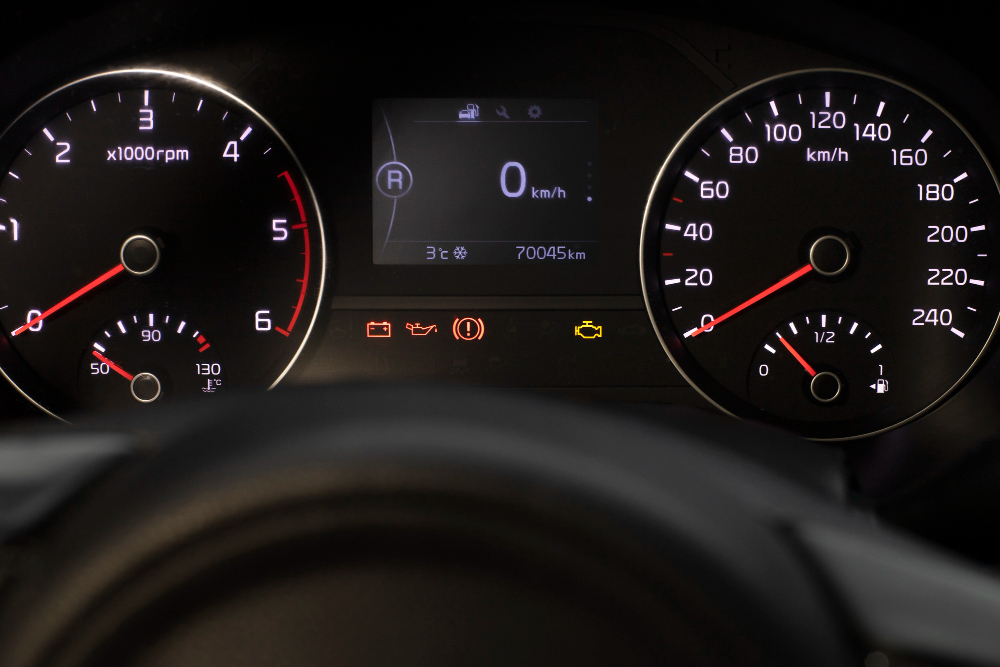
Seeing a warning light appear on your dashboard can be worrying, particularly when your MOT is approaching. Some dashboard warning lights are checked as part of the MOT and, if they indicate a genuine fault, can result in an automatic failure. Others may be a warning that needs investigating but will not necessarily cause the vehicle to fail.
For drivers in Portsmouth, PortsmouthTyre can carry out MOT testing and diagnostic checks to identify problems behind warning lights before they become a reason for an MOT failure. Understanding which lights matter most can help you deal with problems before your test.
Which Dashboard Warning Lights Can Cause an MOT Failure?
Not every illuminated warning light means an automatic MOT failure. The tester has to establish whether the light indicates a specific fault covered by the MOT inspection.
Some of the most important warning lights include:
| Warning light |
What it can indicate |
MOT risk |
| ABS |
Anti-lock braking system fault |
Major defect |
| Airbag/SRS |
Fault with the supplementary restraint system |
Major defect |
| ESC/ESP |
Electronic stability control fault |
Major defect |
| Engine management |
Emissions or engine management fault |
Major defect on applicable vehicles |
| Brake system |
Brake system or fluid warning |
Can result in a major defect |
| Electronic parking brake |
Parking brake system fault |
Can result in a major defect |
| TPMS |
Low tyre pressure or sensor fault |
Depends on the vehicle and fault |
The important point is that the colour and symbol alone do not determine the MOT result. The tester has to establish what the warning light is telling them.
A light that briefly illuminates when you switch the ignition on and then goes out is generally part of the vehicle’s normal self-check. A warning light that remains illuminated after the engine starts is a different matter.
Why Do Warning Lights Matter During an MOT?
Modern cars rely heavily on electronic systems to monitor brakes, airbags, emissions, stability control and other safety-related components.
The MOT therefore checks certain warning lamps to make sure important systems are functioning correctly.
If a warning lamp indicates that a safety or emissions-related system has a fault, the vehicle may no longer meet the required MOT standard.
This is particularly relevant to newer cars, where a dashboard warning light can be the first indication of a problem that is not yet obvious when driving.
It is a good reason not to simply reset a warning light before an MOT. Clearing the light does not necessarily fix the underlying fault, and the problem may return during the test or remain detectable through diagnostic equipment.
ABS Warning Light
The ABS warning light is one of the dashboard warnings that can cause an MOT failure.
ABS, or anti-lock braking system, helps prevent the wheels from locking under heavy braking. The system relies on components including wheel-speed sensors, wiring and electronic control equipment.
If the ABS warning light stays illuminated and indicates a system malfunction, this can result in a major MOT defect.
You may also notice other symptoms, such as changes in braking behaviour or additional warning lights appearing at the same time.
An ABS warning should therefore be investigated before an MOT rather than ignored until test day.
PortsmouthTyre offers diagnostic testing in Portsmouth to help identify faults behind dashboard warning lights and establish what needs further investigation.
Airbag and SRS Warning Light
The airbag warning light is another important one to take seriously.
Your car’s supplementary restraint system, commonly referred to as SRS, can include airbags and seat-belt pretensioners. If the SRS malfunction indicator remains illuminated because it detects a fault, the vehicle can fail its MOT.
An illuminated airbag light does not necessarily mean that an airbag has deployed or that there is a major mechanical problem. Faults can occur with sensors, wiring, connectors or other components within the restraint system.
Because airbags are safety equipment, however, a warning should never be dismissed simply because the car appears to drive normally.
If the SRS light has appeared, have the system diagnosed before booking an MOT where possible.
ESC, ESP and Stability Control Warning Light
Electronic stability control goes by several names depending on the vehicle manufacturer. You may see ESC, ESP, DSC, VDC or another abbreviation on the dashboard.
The system is designed to help maintain vehicle stability if the car begins to lose traction or deviate from the driver’s intended direction.
If the dashboard warning light indicates an actual ESC malfunction, this can result in a major MOT defect.
There is an important distinction, though. Some vehicles allow the driver to temporarily switch stability control off. A light showing that the system has deliberately been switched off does not necessarily mean the system has failed.
The tester needs to establish what the warning lamp is actually indicating.
Engine Management Light
The engine management light, sometimes called the EML or check engine light, is one of the warnings drivers most commonly worry about before an MOT.
On applicable petrol and diesel vehicles, the engine malfunction indicator lamp is checked as part of the MOT.
A light that remains illuminated because the system is detecting a malfunction can result in a major defect.
The reason could be relatively straightforward, such as a faulty sensor, but it could also relate to emissions, fuel injection, ignition, exhaust or other engine-management components.
PortsmouthTyre’s diagnostic service can identify fault codes and investigate issues involving the engine, exhaust, emissions systems and other vehicle electronics.
If your engine management light has appeared, arranging a diagnostic check before your MOT is often more sensible than simply hoping it will disappear.
Brake Warning Light
A red brake warning light deserves immediate attention regardless of whether your MOT is due.
Depending on the vehicle, the warning could indicate low brake fluid, a problem with the braking system or another fault. The exact meaning varies between manufacturers, so your vehicle handbook is useful if you are unsure.
Brake problems are already a common MOT failure area, and warning lights can provide an important clue that something requires investigation.
Do not assume that a car is safe simply because the brakes still feel normal. Some brake faults can develop gradually.
PortsmouthTyre provides brake repair and replacement services in Southsea, including inspection and replacement of worn brake components where required.
Electronic Parking Brake Warning
Many newer cars use an electronic parking brake instead of a traditional handbrake.
A warning light or message can indicate a fault with the electronic parking brake system. Depending on the exact problem, this can result in an MOT defect.
Because electronic parking brakes can be integrated with other braking and vehicle-control systems, diagnosing the underlying problem is preferable to simply resetting the warning.
If the warning appears intermittently, make a note of when it happens and have the system checked before the MOT.
What About the Tyre Pressure Warning Light?
The TPMS warning light is slightly different.
A TPMS light can simply mean that one or more tyres have lost pressure. It can also indicate a problem with a sensor or the monitoring system itself.
Do not assume that an illuminated TPMS light automatically means an MOT failure in every situation. The tester considers the vehicle and the specific fault according to the MOT inspection requirements.
If the light has appeared, start by checking all four tyre pressures against the manufacturer’s recommended figures. Do not forget the spare tyre if your vehicle has a monitored spare.
If the warning remains after the pressures have been corrected, the system may need further investigation.
PortsmouthTyre provides free TPMS checks in Portsmouth, and replacement programmed TPMS sensors are also available where required.
Why Warning Lights Sometimes Go Out
A warning light disappearing does not always mean the underlying problem has been fixed.
Modern vehicles can detect intermittent faults and may switch a warning light off if the problem is no longer present during subsequent journeys. The fault may nevertheless be stored in the vehicle’s electronic systems.
For example, a sensor could intermittently produce an incorrect reading, causing a warning light to appear and then disappear.
If a warning light has recently been illuminated, mention it when booking a diagnostic check even if it is no longer showing on the dashboard.
This can help technicians investigate stored fault information and identify potential problems before they develop into something more serious.
Can You Reset a Warning Light Before an MOT?
It is possible for some warning lights to be reset after the underlying fault has been repaired, but simply clearing the warning does not solve the problem.
If a warning light is associated with an MOT-relevant system, the fault needs to be properly diagnosed and repaired.
Trying to hide a warning before an MOT can also leave you driving with a genuine safety or emissions problem.
A diagnostic check is a much better approach. It can help establish why the warning appeared and whether further repair is required.
What Should You Do Before Your MOT?
If your dashboard is completely clear when the engine is running, that is a good starting point. You should still carry out some basic checks before your test.
Pay particular attention to:
- ABS warning lights
- Airbag or SRS warnings
- Engine management lights
- ESC or ESP warnings
- Brake system warnings
- Electronic parking brake warnings
- TPMS warnings
- Any new warning message that has appeared recently
Do not ignore a warning simply because the car appears to be driving normally. Some of the systems monitored by these lights are designed to alert you before a problem becomes obvious from behind the wheel.
Book an MOT or Diagnostic Check in Portsmouth
Dashboard warning lights can range from a simple reminder to a sign of a fault that could result in an MOT failure. The important thing is understanding what the particular warning means rather than assuming every illuminated symbol has the same significance.
ABS, SRS, ESC and applicable engine management warning lights deserve particular attention because genuine faults in these systems can result in major MOT defects.
If a warning light has appeared, getting it checked before the MOT gives you the opportunity to identify and repair the problem rather than discovering it during the test.
PortsmouthTyre provides MOT testing at Unit 3, 10 Rodney Road, Southsea, Portsmouth, alongside diagnostic, brake, servicing and tyre services. MOT appointments can be booked online, with same-day appointments available through the live booking system.
A warning light is there to tell you something. Acting on it before your MOT can save you the inconvenience of a failed test and, more importantly, help keep your car safe and reliable on the road.