Passing your MOT is always good news, but seeing advisories on the certificate can leave you wondering what they actually mean. An advisory does not mean your car has failed. Instead, it highlights a component that has passed the required standard but may need attention as it wears or deteriorates.
For drivers using PortsmouthTyre, understanding MOT advisories can help you decide which issues need immediate attention and which can simply be monitored. Knowing the difference can also help prevent a minor problem from becoming an expensive repair later.
What Is an MOT Advisory?
An MOT advisory is a warning about something identified during the test that does not currently meet the criteria for a failure but may need attention in the future.
The distinction is important. Your car can pass its MOT with advisories because the identified issues are not considered serious enough to fail the vehicle at that point in time.
For example, a tester may find that a tyre is showing signs of wear but remains above the legal minimum tread depth. The tyre can pass the MOT, but continued driving will eventually reduce the tread further.
An advisory is therefore best viewed as an early warning rather than a failure.
What Does “Monitor and Repair” Mean?
When an MOT result effectively tells you to monitor and repair something, it means the issue is not currently serious enough to cause a failure, but it should not simply be forgotten.
The urgency depends on the component involved and how quickly it is expected to deteriorate.
| MOT result |
What it means |
What you should do |
| Advisory |
Wear or deterioration has been identified |
Monitor the condition and plan repairs |
| Minor defect |
A fault is present but does not cause an MOT failure |
Arrange a repair when practical |
| Major defect |
A serious fault that causes an MOT failure |
Have the problem repaired |
| Dangerous defect |
An immediate safety risk |
Do not continue driving until dealt with |
Two cars could receive the same number of advisories but require completely different levels of attention. The nature of each advisory matters far more than the number appearing on the certificate.
Do You Need to Repair an MOT Advisory Immediately?
Not always.
An advisory does not automatically mean that you need to authorise a repair on the day of your MOT. Some items may have plenty of usable life remaining, while others could deteriorate relatively quickly.
The sensible approach is to understand what has been identified and ask how urgently it should be addressed.
Common examples include:
- Tyres approaching the legal tread limit
- Brake pads or discs showing wear
- Suspension components beginning to deteriorate
- Minor exhaust deterioration
- Worn windscreen wipers
- Small fluid leaks
- Components showing early signs of wear
Safety-critical components deserve particular attention. If an advisory concerns tyres, brakes, steering or suspension, do not simply assume it can be ignored until next year’s MOT.
Common MOT Advisories Explained
Tyres Showing Signs of Wear
Tyre advisories are among the most useful warnings to take seriously because tyre condition can change significantly depending on mileage and driving habits.
A tyre can pass an MOT while approaching the end of its useful life. Continued driving will gradually reduce the tread depth, potentially taking it below the legal minimum.
Look beyond the tread depth. Check for cuts, cracks, bulges and uneven wear, particularly around the inner and outer edges.
Uneven wear can also point to another problem, such as incorrect wheel alignment, suspension wear or incorrect tyre pressures. Simply replacing the tyre may not address the underlying cause.
Portsmouth Tyre supplies and fits tyres from its Southsea workshop, with free fitting when tyres are purchased through the business.
Brake Wear
A brake advisory does not necessarily mean your brakes are unsafe. It can indicate that pads, discs or other components are becoming worn and will need replacing in the future.
However, brakes are one area where waiting for a problem to become obvious is not a good strategy.
Grinding, squealing, vibration through the steering wheel or brake pedal, or the car pulling to one side when braking can all indicate that further investigation is needed.
If brake wear appears as an advisory, ask how much usable life remains. This gives you a much better idea of whether you need to budget for the repair soon or can monitor the condition during routine driving.
Suspension Wear
Suspension components can deteriorate gradually, particularly on vehicles regularly driven over potholes and speed bumps.
An MOT advisory could relate to worn bushes, springs, shock absorbers or other suspension components.
You may notice knocking or clunking noises, excessive bouncing, uneven tyre wear or changes in how the car handles. However, some suspension wear is difficult to identify from behind the wheel.
If your MOT highlights suspension wear, having the component inspected can establish whether it needs replacing immediately or can safely be monitored.
Exhaust Deterioration
An advisory concerning the exhaust system can indicate corrosion, deterioration or another developing issue.
A small problem may not affect the vehicle’s MOT result, but exhaust components can deteriorate further over time.
If you notice a louder exhaust note, rattling underneath the car or fumes where they should not be, have the system inspected rather than waiting for the next MOT.
Windscreen Wipers and Visibility
Windscreen wipers are simple components, but they play an important role in maintaining visibility.
If blades are worn, cracked or failing to clear the windscreen properly, an advisory may be recorded.
Replacing them before they become a serious problem is straightforward. You should also keep the washer reservoir topped up with suitable screenwash and check your windscreen regularly for chips or cracks.
How Long Can You Drive With an MOT Advisory?
There is no standard period for which an MOT advisory remains safe.
An advisory describes the condition of a component at the time of testing. It does not provide a fixed number of miles or months before the component must be replaced.
For instance, a tyre with some wear remaining could continue to be suitable for thousands of miles, depending on the vehicle and driving conditions. Another tyre could deteriorate much more quickly.
Your annual mileage, driving style, road conditions and the condition of the component all make a difference.
The best approach is to ask the garage for practical guidance and monitor the affected component rather than treating the advisory as an automatic deadline.
Can an MOT Advisory Become a Failure?
Yes.
An advisory is based on the vehicle’s condition on the day it was tested. If the component continues to wear, it can eventually reach the point where it no longer meets the MOT requirements.
Tyres are a straightforward example. A tyre may pass with an advisory because it is approaching the minimum tread depth. After several thousand miles, it could fall below the legal limit and cause an MOT failure.
The same principle applies to brakes, suspension, steering, exhaust components and other parts.
This is why keeping a record of MOT advisories is useful. It gives you an idea of which areas deserve attention before your next test.
Do Advisories Mean Your Car Needs a Service?
Not necessarily, because an MOT and a service have different purposes.
An MOT checks whether a vehicle meets the required legal standards in the areas covered by the test. A service is designed to maintain the vehicle and identify developing mechanical problems.
If your MOT produces several advisories, a service or vehicle inspection can be a sensible next step. It gives a technician an opportunity to assess the highlighted components and check the general condition of the car.
Portsmouth Tyre offers car servicing alongside MOT testing, tyres, brakes, diagnostics and other vehicle maintenance work. Having these services available at the same workshop can make it easier to deal with MOT advisories before they become more serious.
For drivers unsure about what type of service their vehicle needs, the guide to the difference between mini, interim, full and major car services explains what is generally included at each level.
What Should You Do After Receiving MOT Advisories?
The first step is not to panic. An advisory means your vehicle has passed.
Instead, go through each item and establish what it means, how serious it is and how quickly it is likely to deteriorate.
Prioritise safety-critical issues such as tyres, brakes, steering and suspension. If the advisory relates to something less urgent, make a note of it and check its condition during future servicing or maintenance.
It is also worth keeping the previous MOT certificate available. Comparing advisories from one year to the next can show whether a component is gradually deteriorating.
If the same issue appears repeatedly, it may be time to deal with it rather than continuing to monitor it.
Book Your Next MOT in Portsmouth
MOT advisories are not necessarily bad news. In fact, they can be extremely useful because they give you advance warning about wear and deterioration before a component becomes serious enough to cause a failure.
The important thing is to understand what the advisory means and act accordingly. Some issues can be monitored, while others are better dealt with sooner rather than later.
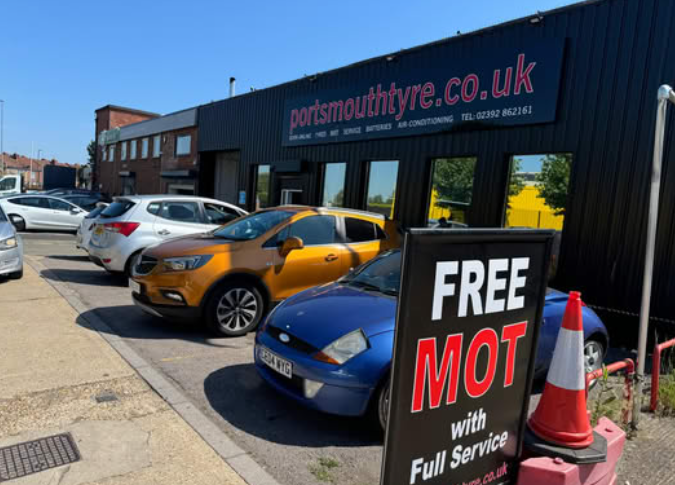
PortsmouthTyre provides MOT testing at its workshop on Rodney Road in Southsea, with online booking and same-day MOT appointments available. Most MOT tests take around 45–60 minutes, with customers able to wait at the workshop or leave their vehicle with the team.
Treat an MOT advisory as a warning worth listening to. Dealing with developing problems before they become failures can help keep your car safe, reliable and ready for the road.